The Hidden Cost of Skipping Storyboards
Most video production problems do not start on set. They start in pre production when there is no storyboard guiding the project. Miscommunication, unexpected changes, missing shots and wasted hours appear when the team has no clear visual plan. Without a storyboard, clients feel unsure about the direction, the crew is forced to improvise and the editor receives a collection of shots that do not fit together.
After almost seventeen years in the film industry, we have seen how skipping a storyboard quietly damages the entire production. The shoot becomes slower, the footage becomes inconsistent and the final video loses clarity and impact. The cost is not obvious at first, but it grows with every stage of the project. A missed storyboard often becomes the reason a corporate video or business promo does not match the original vision.
A storyboard is not just a creative tool. It is a form of insurance for the whole production. When it is missing, the price is almost always paid later in reshoots, extra editing, client revisions or a final product that feels weaker than it should.
Storyboarding as Your First Layer of Visual Direction
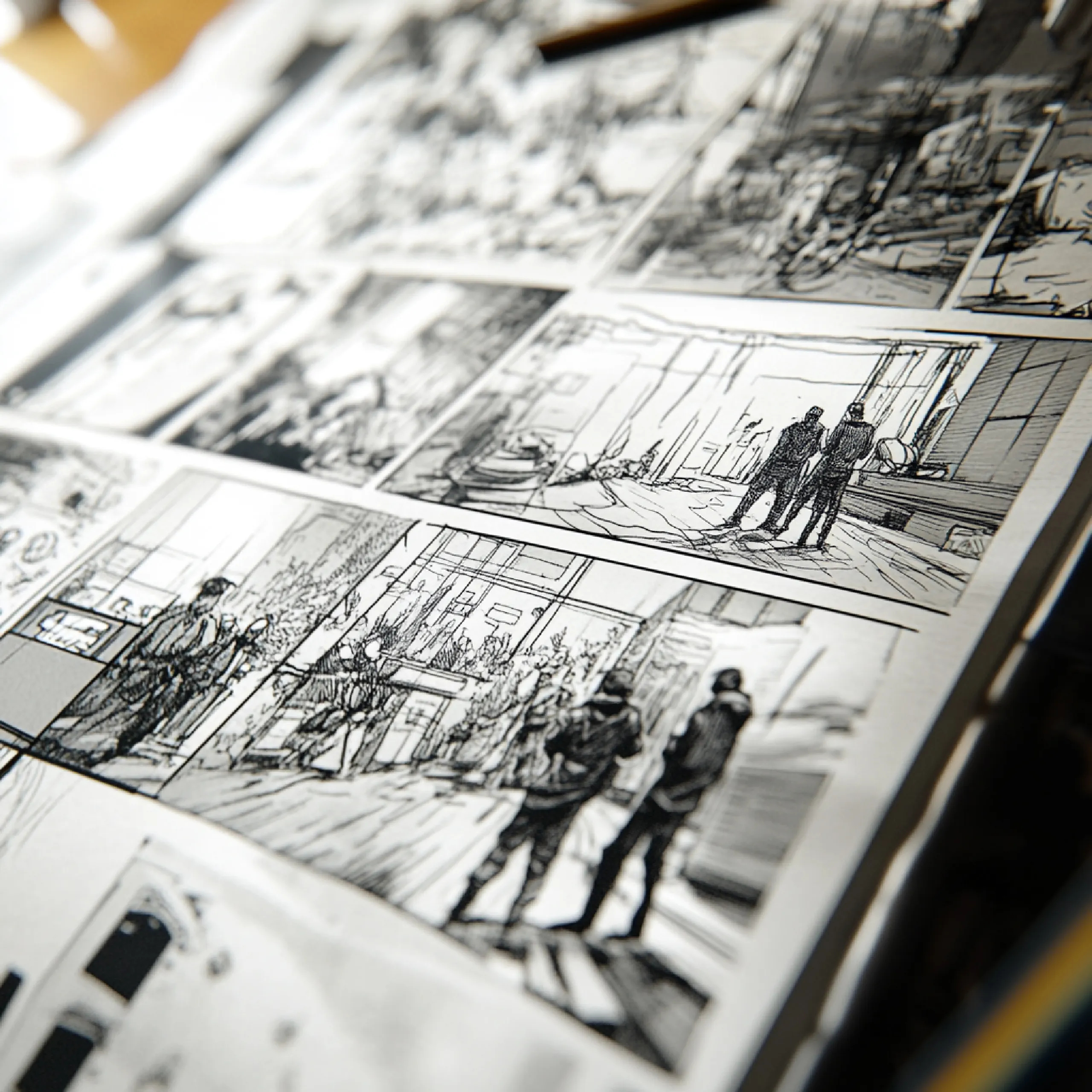
A storyboard is the moment when a video project stops being an idea and becomes something real. It pulls the concept out of someone’s head and places it on paper where the entire team and the client can finally see the same vision. This is the first layer of visual direction, the foundation that shapes how the story will look and feel on screen.
With a storyboard, the essential elements of the video become clear. Camera angles, pacing, transitions and the emotional rhythm of each moment all come to life before the shoot begins. Instead of guessing how a scene should unfold, everyone can see it frame by frame. This clarity is crucial whether you are producing a corporate video, a business promo, a product commercial or a short social media clip.
Early visual direction sets the tone for the entire production. It guides the director, supports the cinematographer and helps the client understand how the final video will flow. When a storyboard is in place, the creative choices become intentional. The project gains structure, the messaging becomes sharper and the final video feels cohesive and professionally executed.
How a Storyboard Aligns Clients, Directors and Crew
A solid storyboard can save hours of conversations and prevent days of avoidable confusion. It aligns the entire production team before the first light is turned on, turning a complex project into a clear, shared visual plan. When everyone is working from the same frames, the production moves forward with precision.
For the client, a storyboard removes uncertainty. They know exactly what they are approving and can see how the final video will look and flow. There are no surprises on the shoot day or in the edit because the expectations are already aligned.
For the director, a storyboard is a roadmap. Every shot has a purpose, every moment has a visual direction and every scene has a clear emotional beat. It allows the director to guide the team with confidence instead of spending time explaining ideas that could be shown visually.
For the cinematographer, a storyboard clarifies the shot list, camera setups and lighting requirements. It eliminates guesswork and helps them prepare lens choices, lighting setups and equipment needs in advance.
For the rest of the crew, the storyboard shows the order of the day, the scene flow and the technical expectations. It keeps the production organized and reduces unnecessary resets and miscommunication.
This alignment is what separates smooth productions from chaotic ones. A storyboard creates a shared language across the team. When everyone is looking at the same visuals and working toward the same goal, the entire shoot becomes faster, calmer and far more effective.
A Better Shooting Day: Efficiency, Timing and Creativity
When a production begins with a clear storyboard, the entire shoot day becomes more predictable and controlled. The team knows exactly where to place the camera, how each scene should unfold and what needs to be captured next. Instead of losing time to guesswork or last-minute decisions, the crew can focus fully on creativity and execution.
A storyboard also sets the timing for the day. It outlines the rhythm of the shoot, highlights the most important moments and prevents unnecessary setups or repeated resets. This structure keeps the production moving at a steady pace and ensures that every critical shot gets the time and attention it deserves.
For corporate videos, business promos and social media content, efficiency is everything. Locations are often limited, schedules are tight and clients expect clear results without delays. A storyboard transforms the set into a professional, well-coordinated environment where every department knows what to do and when to do it.
The result is a smoother workflow, a calmer team and a video that looks intentional from start to finish. Storyboarding removes the stress from shoot day and gives space for real creativity to happen.
Why Storyboards Matter Even More for Corporate and Business Videos
Many business owners still assume that storyboarding is something reserved for films or large commercial shoots. In reality, it is even more critical for corporate videos and business content. These projects often come with tight schedules, limited locations, small crews and strict brand guidelines. Without a storyboard, every one of these limitations becomes harder to manage.
A storyboard gives companies a clear visual direction before the shoot begins. It shows what the message will look like, how the scenes will flow and what the final structure of the video will be. Clients know exactly what they are approving and what they are paying for. There are no surprises during production or in the editing room because the creative plan is already aligned.
For corporate teams, this level of clarity is essential. When marketing departments, brand managers and leadership all need to sign off on the same project, a storyboard becomes the easiest way to keep everyone on the same page. It ensures the tone is right, the style matches the brand and the message stays consistent across all platforms.
At YesWellDone, storyboarding is non negotiable for business content. It protects the client’s vision, reduces the risk of miscommunication and guarantees that the final video meets both creative and strategic goals. Whether it is a corporate story, a product showcase or a social media campaign, the storyboard is the foundation that keeps the entire project focused and professional.

The Small Investment That Saves the Entire Project
A storyboard may only take a few hours to prepare, but it can save days of confusion, reshoots and costly revisions. It keeps the entire production aligned from the first idea to the final edit. This single step strengthens every stage of the process and protects the project from drifting away from its original purpose.
At YesWellDone, storyboarding is part of our workflow for every type of content we produce. Corporate videos, business promos, social media campaigns and music videos all start with the same foundation: a clear visual plan. This plan lays out the structure, defines the pacing and ensures the creative direction is consistent across every scene.
What looks like a small task at the beginning becomes the anchor that holds the entire production together. Without it, teams improvise, shots are missed and the edit becomes a long battle to fix problems that could have been avoided.
Skipping a storyboard might feel like a time saver, but in reality, it costs far more than it saves. A well-built storyboard is a small investment that protects the budget, the timeline and the quality of the final video. It is one of the most effective steps a business can take to make sure their project is delivered with clarity, confidence and professional precision.
Published on 12/2/2025 by YesWellDone Team