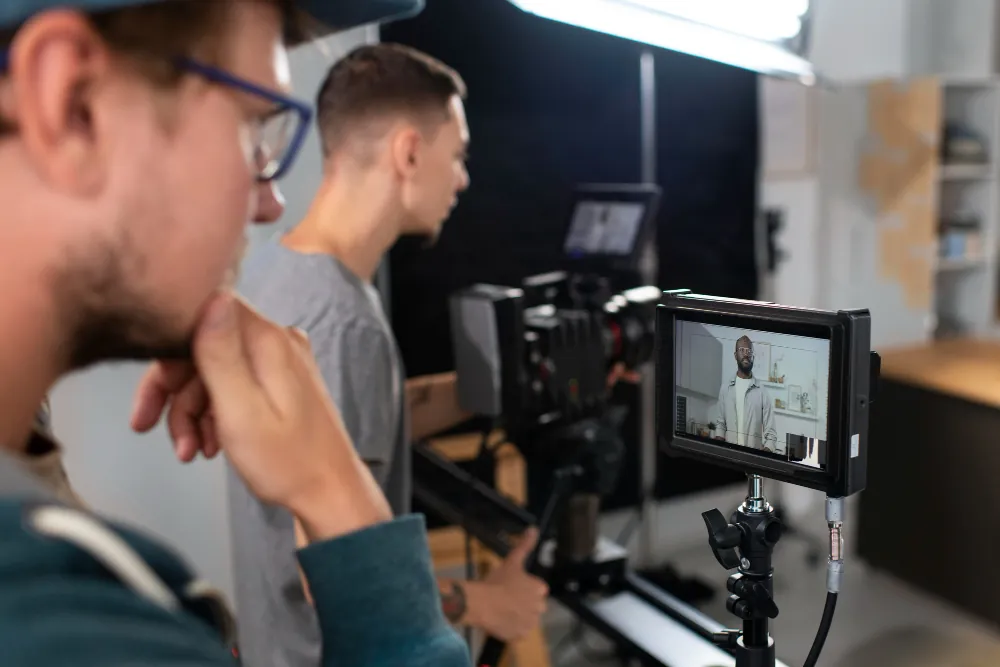
The best customer testimonial video questions do more than invite a customer to say something positive. They establish who the customer is, what made the decision difficult, why they chose the service, what the experience was actually like, and which results can be stated accurately.
That context is what turns praise into useful proof. A future buyer should be able to recognise a relevant situation, understand the customer’s hesitation, and hear enough detail to judge whether the story applies to them.
Start with the buyer’s doubt, not a generic question list
Before writing interview questions, decide which uncertainty the customer story needs to address.
A visitor comparing professional firms may wonder whether the team will understand a complex situation. A homeowner may worry about disruption, communication, or hidden scope. A marketing manager may need evidence that a production partner can manage stakeholders and deliver several usable versions.
These are different doubts, so they require different stories.
Write down five things before the interview:
- the audience for the testimonial
- the specific doubt the story should address
- where the finished video will appear
- what the viewer should understand or do next
- which details and results can be verified and approved
This step prevents the interview from becoming a general conversation about how “great” the company is. It also helps the editor identify which answers belong in the full story and which can work as focused excerpts.
Customer testimonial video questions that build credible context
You will rarely need every question below. Choose the ones that fit the customer, the buyer’s concern, and the intended destination. A focused interview with useful follow-ups is usually stronger than a long questionnaire delivered in order.
Establish who the customer is
1. Could you introduce yourself and explain the part of your work or situation that is relevant to this project?
This gives the viewer enough context to decide whether the experience is comparable to their own. Ask for what matters to the story rather than a complete biography.
2. What was happening before you started looking for this kind of service?
The answer should describe the starting situation in the customer’s own language. It may reveal a practical problem, a missed opportunity, a deadline, or a change that made the old approach unsuitable.
3. What had you already tried, and what was still unresolved?
This can clarify why the customer needed a different approach without requiring them to criticise another provider.
Explore the decision and the hesitation
4. What made you decide that the issue needed attention at that point?
This identifies the buying trigger. It helps a future customer understand when the service becomes relevant, rather than presenting the decision as inevitable.
5. What concerns or questions did you have before moving forward?
Hesitation makes a customer story more credible when it is genuine and relevant. It also gives the final video a chance to address a doubt that another buyer may share.
6. What mattered most while you were comparing your options?
This reveals the customer’s decision criteria without asking them to make exaggerated comparisons or disparage competitors.
7. What gave you enough confidence to choose this approach or team?
Look for a specific reason: the proposed process, relevant experience, responsiveness, clarity of scope, or another factor the customer can explain honestly.
Make the working experience concrete
8. What happened after you decided to move forward?
This invites a chronological answer and can uncover useful details about onboarding, planning, communication, delivery, or support.
9. Was there a moment in the process that made the approach feel different or especially useful?
A concrete moment is usually more informative than a broad adjective. Follow up by asking what happened and why it mattered.
10. Can you give an example of how the team handled a question, change, or constraint?
This question helps demonstrate judgement and process. It is particularly useful for considered services where the buyer is evaluating how the provider will work, not only the final deliverable.
11. What part of the experience would have been difficult to understand before you went through it?
The answer may reveal an invisible standard that should be shown through interview detail or supporting footage.
Ask about results without putting words in the customer’s mouth
12. What is different now compared with the starting situation you described?
This allows the customer to explain change in practical terms. The answer does not need a dramatic number to be useful.
13. Is there a specific result or example you are comfortable sharing and able to verify?
Do not pressure the customer to manufacture a metric. If a result cannot be confirmed or published, focus on the experience and the observable change instead.
14. Who do you think this service is a good fit for, and why?
This creates a more useful recommendation than “Would you recommend us?” because it gives the viewer a condition they can compare with their own situation.
15. What would you tell someone facing the same decision you faced?
This often produces a natural closing thought. It allows the customer to speak to the future buyer rather than repeat the company’s marketing message.
Follow-up questions are where useful detail appears
The first answer is not always the most specific one. A skilled interviewer listens for a detail that deserves another question rather than rushing to the next item.
Useful follow-ups include:
- “Could you give me a specific example?”
- “What did that look like before?”
- “Why did that matter to you?”
- “What happened next?”
- “How did you know the situation had changed?”
- “Which part of that result can we state precisely?”
These prompts ask the customer to clarify their own experience. They should not steer the person toward a preferred claim.
Questions that usually weaken a testimonial
Leading questions may produce convenient words, but they can make the final video sound controlled or vague.
Avoid questions such as:
- “Would you say we exceeded your expectations?”
- “How much money did we make you?”
- “Why are we better than every alternative?”
- “Can you repeat this sentence for the camera?”
- “Can you tell us everything about your experience?”
The first four suggest the desired answer or invite a claim that may not be supportable. The last is so broad that the customer has no useful place to begin.
A better question names a real part of the customer’s experience while leaving the answer open.
Prepare the customer without scripting the response
Preparation should reduce uncertainty for the customer, not replace their voice.
Explain who will see the video, where it may be used, how long the recording session will take, and which general topics you expect to cover. Confirm how the customer’s name, role, company, and results may be presented. Give them time to check any figures or sensitive details before filming.
Sharing the themes in advance is helpful. Sending a polished paragraph for the customer to memorise usually is not. Memorised marketing language can make a genuine customer sound less natural and leaves little room for the interviewer to discover the details that make the story credible.
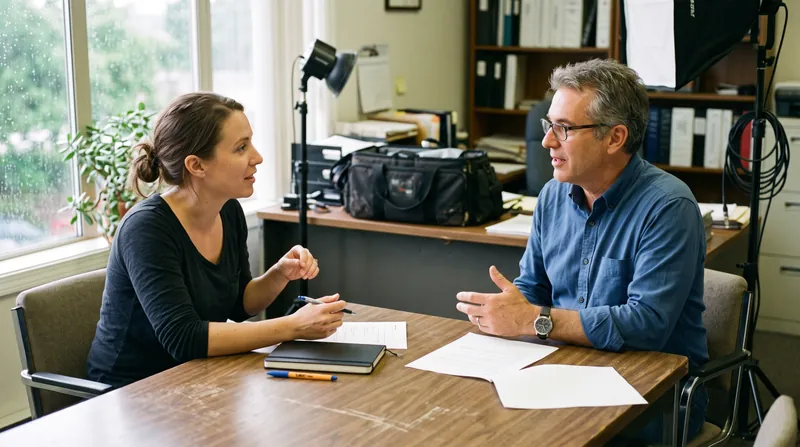
For Canadian advertising, Clause 7 of the Canadian Code of Advertising Standards says testimonials should reflect the person’s genuine, reasonably current opinion, be based on adequate experience with the product or service, and not otherwise be deceptive. This article is production guidance, not legal advice; organisations should confirm their own approval, privacy, disclosure, and claim-review requirements.
Use B-roll as evidence, not decoration
The interview supplies the customer’s account. B-roll can help the viewer see the work, environment, process, or result being discussed.
For a professional service, that might mean a planning meeting, review process, or team interaction. For a trade, it may be an inspection, installation, or completed work. For a clinic, it could be the environment and patient experience, subject to appropriate permissions and industry requirements.
At YWD, the useful question is not simply, “What footage would look good?” It is, “What can the viewer see that supports this part of the customer’s story?”
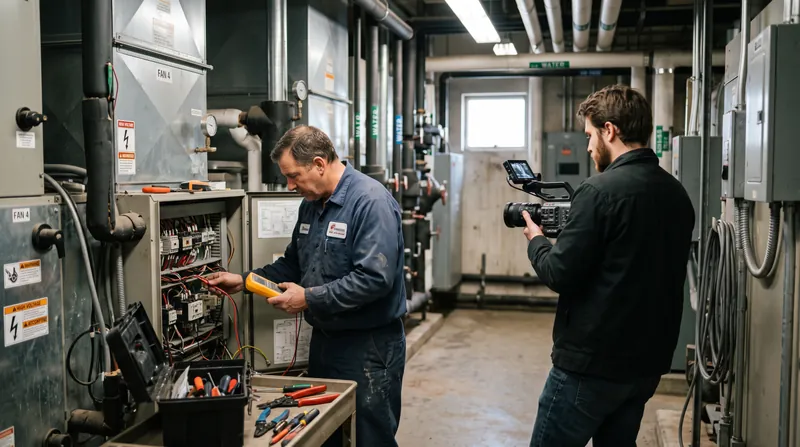
Generic office shots or staged handshakes may fill a visual gap, but they rarely strengthen the proof. Capture the people, actions, decisions, and standards that make the customer’s account easier to understand.
Plan the destinations before the interview
A testimonial intended for one service page needs a different emphasis from a general brand story. A sales follow-up clip may need to address one objection directly. A proposal excerpt may need a concise statement about process or fit. A social cutdown must make sense without the full interview around it.
Decide these destinations before filming so the interviewer can capture complete, usable answers. The production plan may include:
- a fuller customer story for a relevant website or portfolio page
- short excerpts focused on one hesitation, decision factor, or result
- horizontal and vertical versions where those placements are confirmed
- captions and clean framing for viewers watching without sound
- supporting footage matched to the claims used in each edit
YWD’s business video production work is planned around the message, interview structure, filming, post-production, and the places where the finished assets need to work. The YWD portfolio also shows the wider range of trust, proof, interview, and campaign formats a customer story may support.
When a simple recording is enough
Not every testimonial needs a full production. A phone or remote recording may be appropriate when the customer has one clear point to share, the context is easy to explain, and the business needs a straightforward recommendation.
Professional planning becomes more useful when the story represents the company on an important service page or campaign, the customer needs interview direction, the location and process are part of the proof, several versions are required, or claims need careful review.
The format should match the business job. Production quality cannot compensate for generic questions, unsupported claims, or a story with no defined destination.
Plan the doubt before filming the answer
The strongest customer story is not the one with the most praise. It is the one that helps a relevant buyer understand the situation, the decision, the experience, and the evidence in the customer’s own words.
If you have a customer willing to participate but are unsure which doubt the video should address, use the YWD video diagnostic to identify the most useful starting point.
Published on July 24, 2026 by YesWellDone Team
Updated on August 21, 2026